AI Conference 2025 in Potsdam: From Experiment to Practice
On 11 December 2025, from 11:45 to 20:00, the conference “Cultural and Creative Industries in the Age of AI: From Experiment to Practice” took place at the Brandenburg Museum of Future, Present and History. Commissioned by the Ministry of Economic Affairs, Labour, Energy and Climate Action (MWAEK) of the State of Brandenburg, the event brought together creative professionals, start-ups, experts and interested participants to discuss current developments, opportunities and challenges of artificial intelligence in the cultural and creative industries. The conference was fully booked within two days—an unmistakable sign of the topic’s relevance in Brandenburg and beyond.
Voices from Practice: “Next Level Creativity”
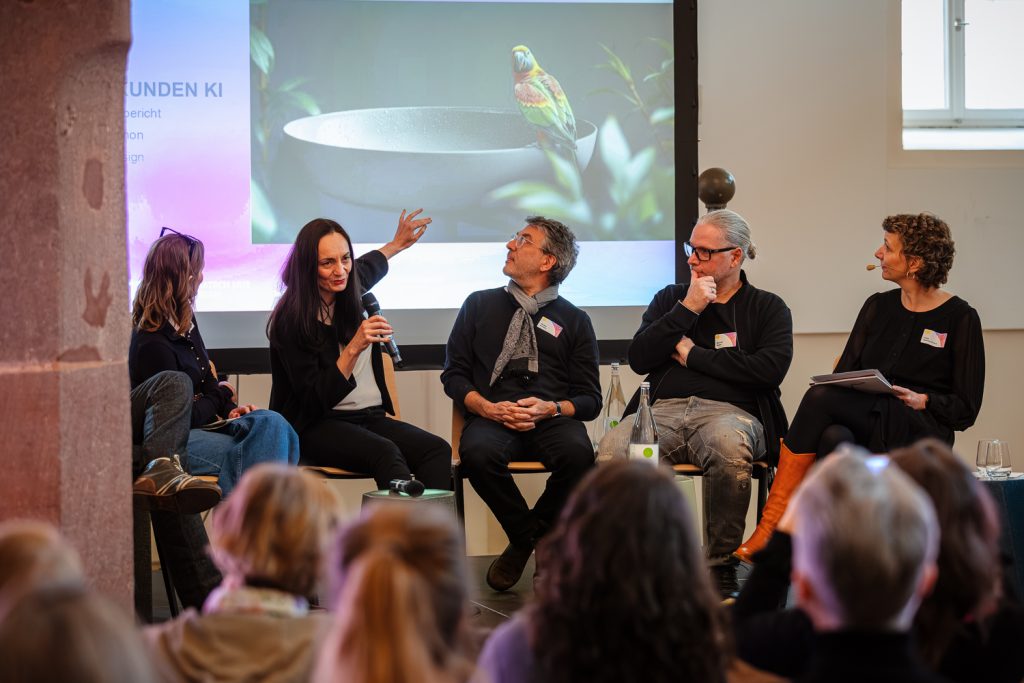
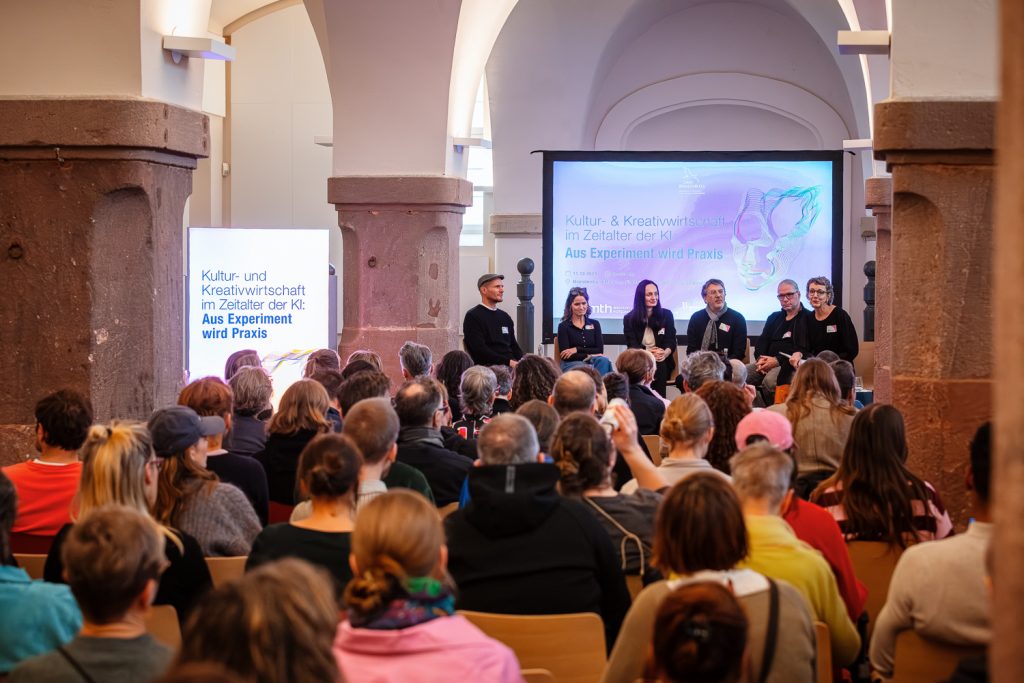
The day opened with the panel discussion “Next Level Creativity – How AI is Changing the Cultural and Creative Industries”, moderated by Katja Dietrich-Kröck (MWAEK). The panel featured Jasdan Joerges (GuidePilot/MicroMovie), Anke Salomon (Design), Michael Boden (Subway to Sally), Katrin Reiling (TEXT FÜR ALLE) and Jan Gabbert (buchstabenschubser).
At the centre were very practical, day-to-day experiences: AI as an idea generator, accelerator and research aid—yet also a tool with clear limitations. The spectrum between experimental curiosity and scepticism became particularly tangible:
- In text work, AI proved useful, for instance for press copy, early concept drafts and overcoming creative blocks. At the same time, the panel stressed that shortening or condensing complex texts can introduce errors and unreliability—making human oversight essential.
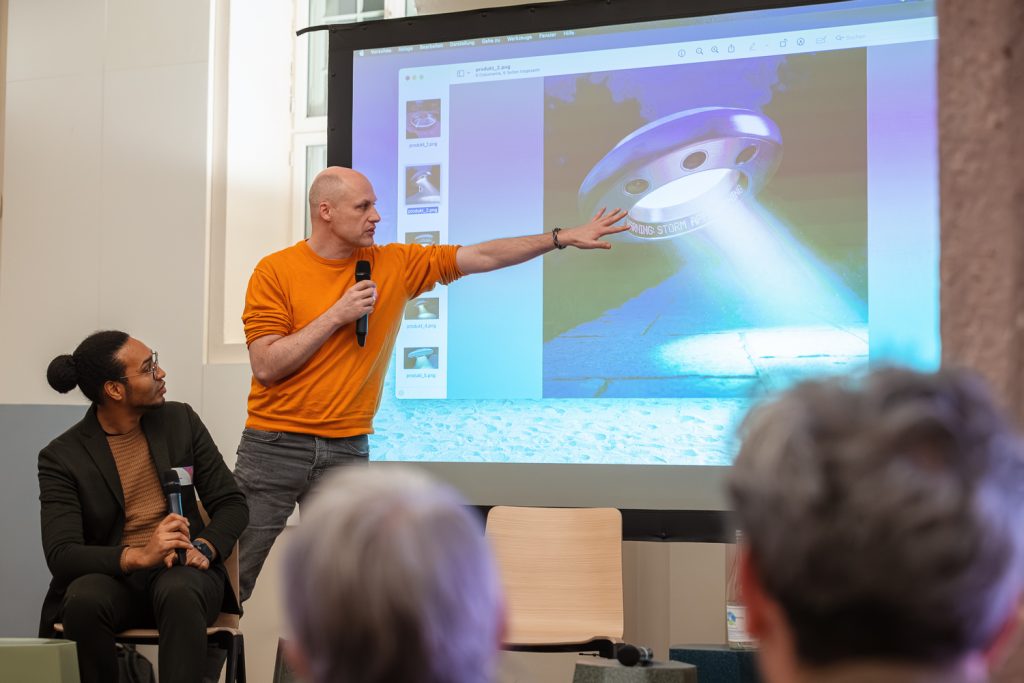
- In design and product development, AI was described as especially strong where visualisation and rendering are concerned. However, when it comes to concept work, empathising with customers and genuine innovation, AI quickly reaches its limits in practice.
- In film and media, it became clear that AI is a tool whose value depends on the specific craft: helpful for certain routines, less convincing for distinctive visual worlds or finely tuned sound and speech design.
- In music, the discussion highlighted that AI may profoundly reshape the industry—particularly in functional and pop music—while live performance and human presence remain irreplaceable.
Keynote: “Hyper-Reality 2.0” – Generative AI’s Leap from 2024 to 2025
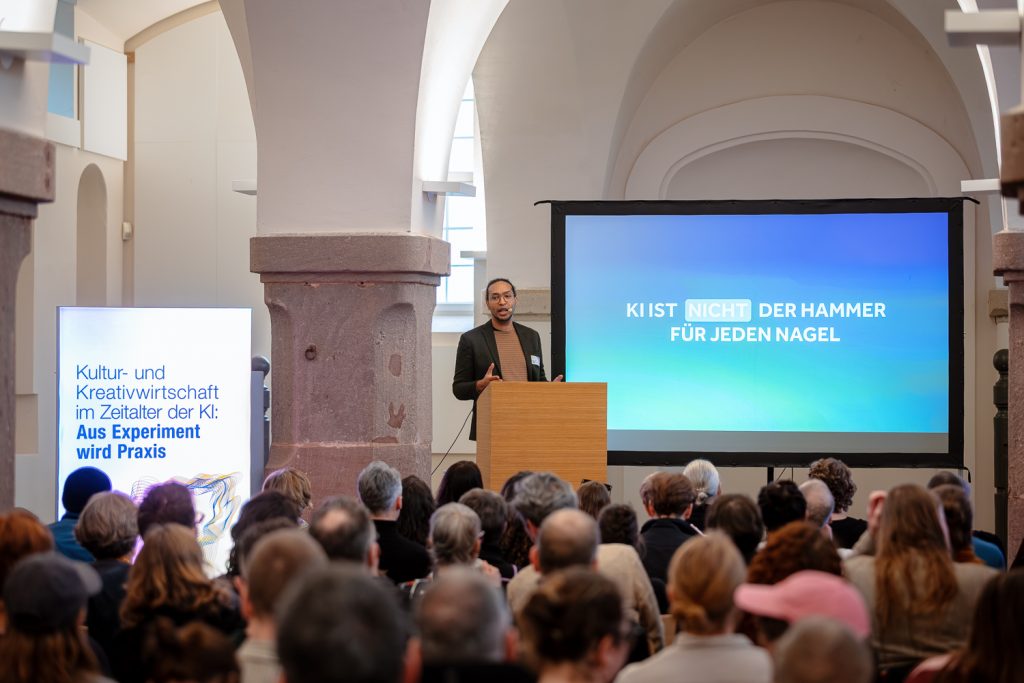
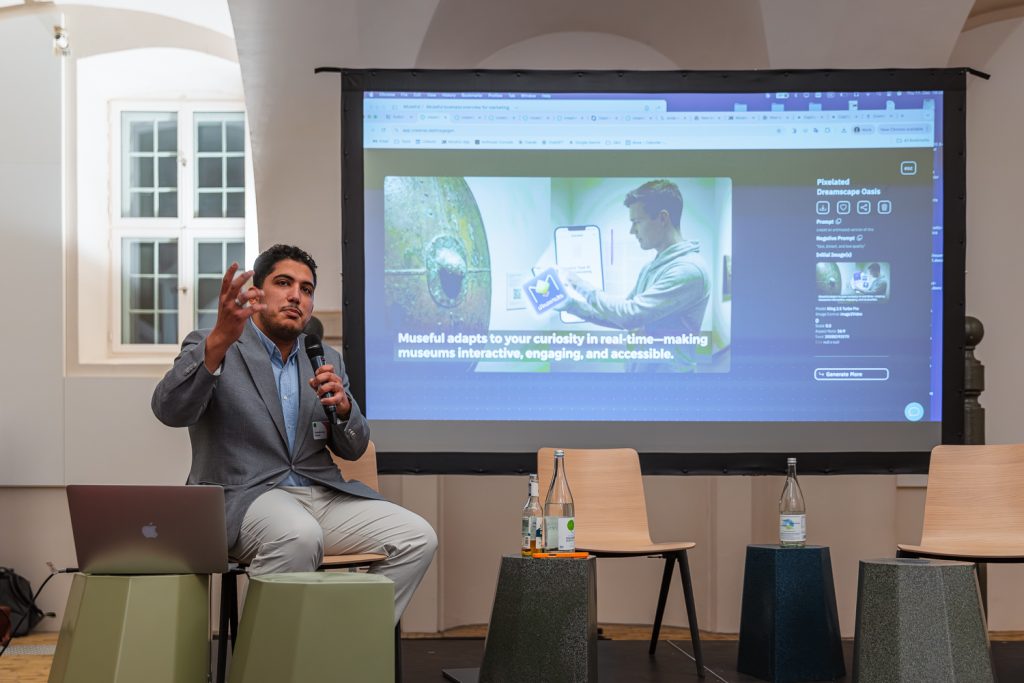
In the keynote “Hyper-Reality 2.0: The Leap of Generative AI from 2024 to 2025”, Jacques Alomo (creamlabs AI) provided a concise overview of the pace of multimodal systems. He outlined how tools such as OpenAI Sora, Google Veo 3 and Runway Gen-4 are accelerating the production of image, video and audio—and why the debate is shifting from “Is this even possible?” towards control, precision and narrative complexity.
A key takeaway: AI is not “the hammer for every nail.” To use it effectively, teams must define use cases clearly, understand workflows and remain flexible. This included the recommendation not to tie oneself to a single model, but to think model-agnostically and continuously benchmark quality (e.g. through blind tests).
Hands-on in the Afternoon: Three Practical Workshops
In the afternoon, things became hands-on: across three parallel workshops, participants tested AI tools using real-world use cases:
- Creating a marketing campaign (from text and visuals to social assets)
- Developing design concepts (iterations, variations, rapid visualisation)
- Building a storyboard for film and theatre projects (including participants’ own scenes)
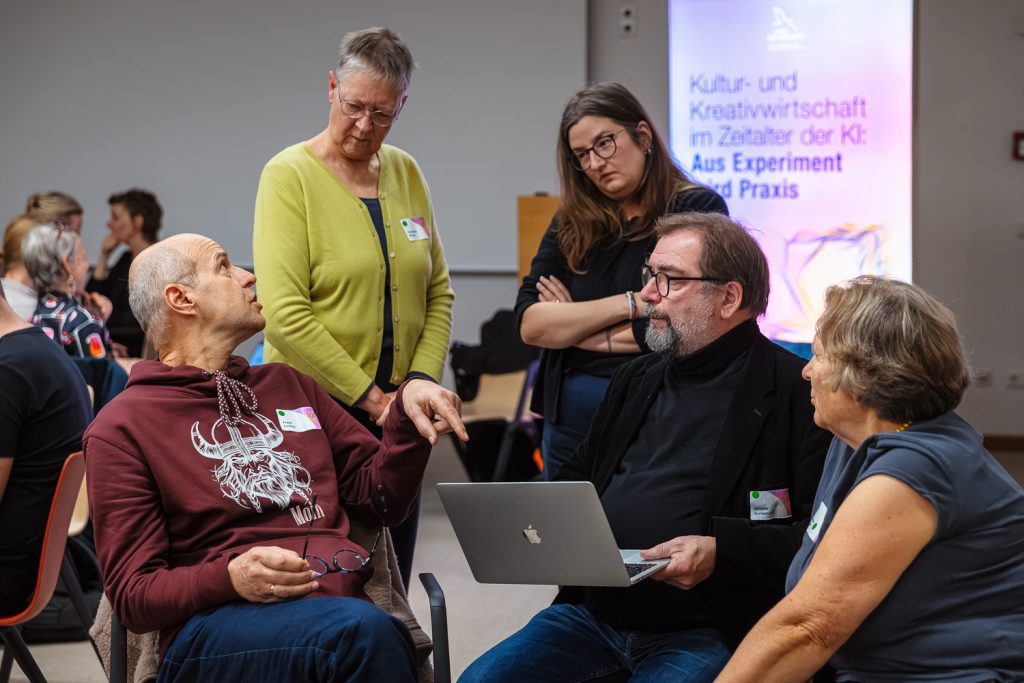
Despite varying levels of prior knowledge, a shared working rhythm quickly emerged. Within two hours, participants produced high-quality outputs—ranging from complete marketing campaigns to storyboard elements and animated concepts. One insight stood out clearly: good results depend heavily on how clearly tasks are framed. Prompts work best when written as precisely as a human briefing.
Law, Ethics and Responsibility: “AI Without Limits?”
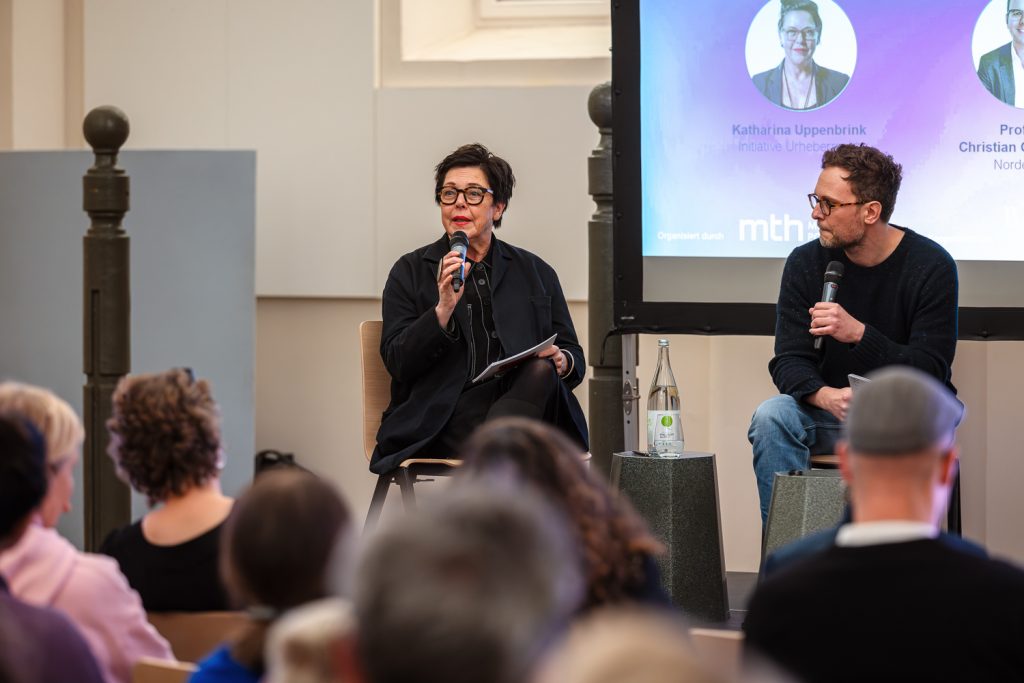
Late in the afternoon, the panel “AI Without Limits? Law, Ethics and Responsibility in the Creative Industries” followed, moderated by Sascha Friesike (Weizenbaum Institute). Katharina Uppenbrink (Initiative Urheberrecht)and Prof. Dr Christian Czychowski (NORDEMANN) examined what current developments—around frameworks such as the EU AI Act, transparency obligations, intellectual property, remuneration and liability—mean for creative practice.
The discussion centred on two perspectives that are often conflated, but must be addressed separately in practice:
- Input questions: May my creative work be used as training material? How are creators remunerated for their work? How can licensing models be designed?
- Output questions: When is a creative result still protected by copyright? How substantial must the human contribution be? And who is liable in case of disputes?
A practical call to action from the panel: review contracts, take AI clauses seriously, and engage more actively as a sector in dialogue with policymakers and associations—so that regulation becomes effective and grounded in real-world practice.
Results, Closing and Key Takeaways
The day concluded with presentations of workshop outcomes. Participants showcased, among other things, a donation appeal video with a social media campaign, rapid product visualisations (e.g. concept ideas in product design), as well as script, storyboard and film building blocks for creative projects.
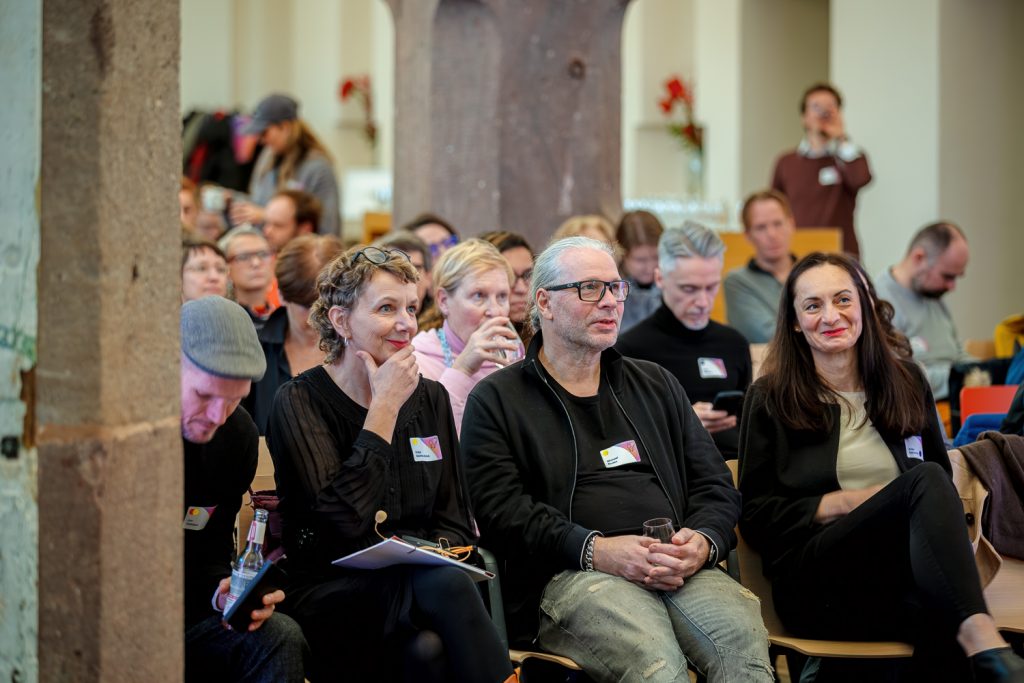
The subsequent networking made visible what shaped the conference overall: AI is already firmly embedded in creative workflows, yet questions of quality, ethical responsibility, fair remuneration and impacts on cultural diversity remain central.
Impressions (Photo Credits: Benjamin Maltry):