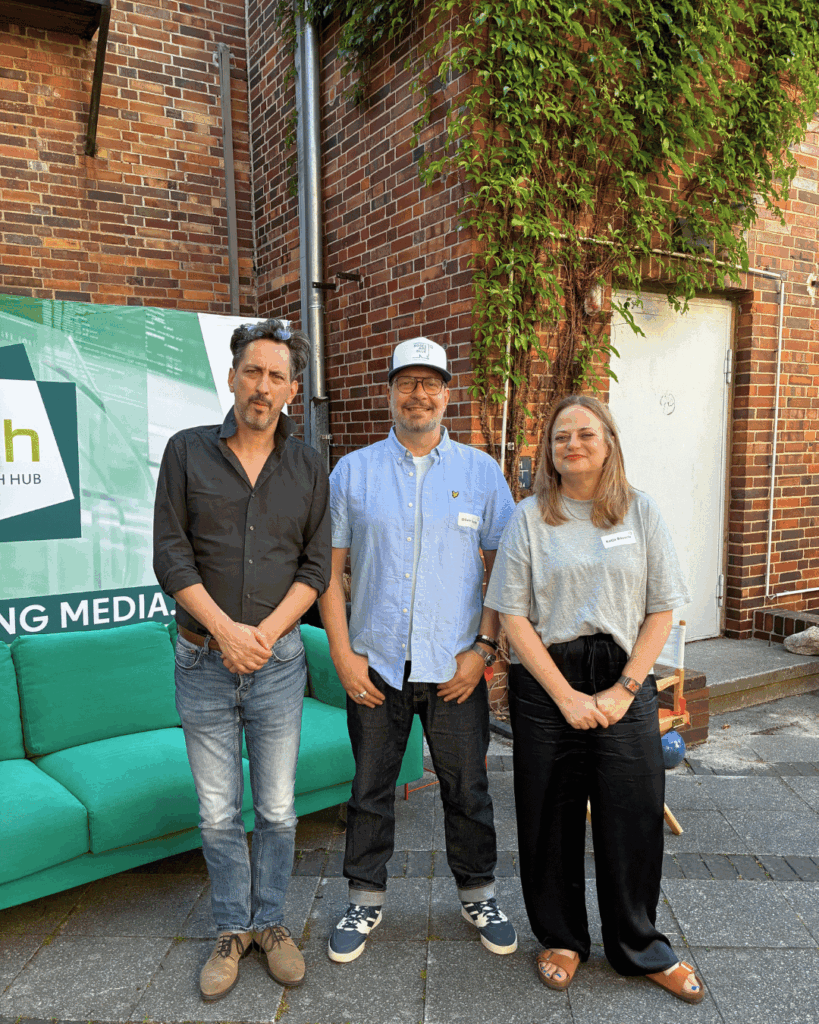
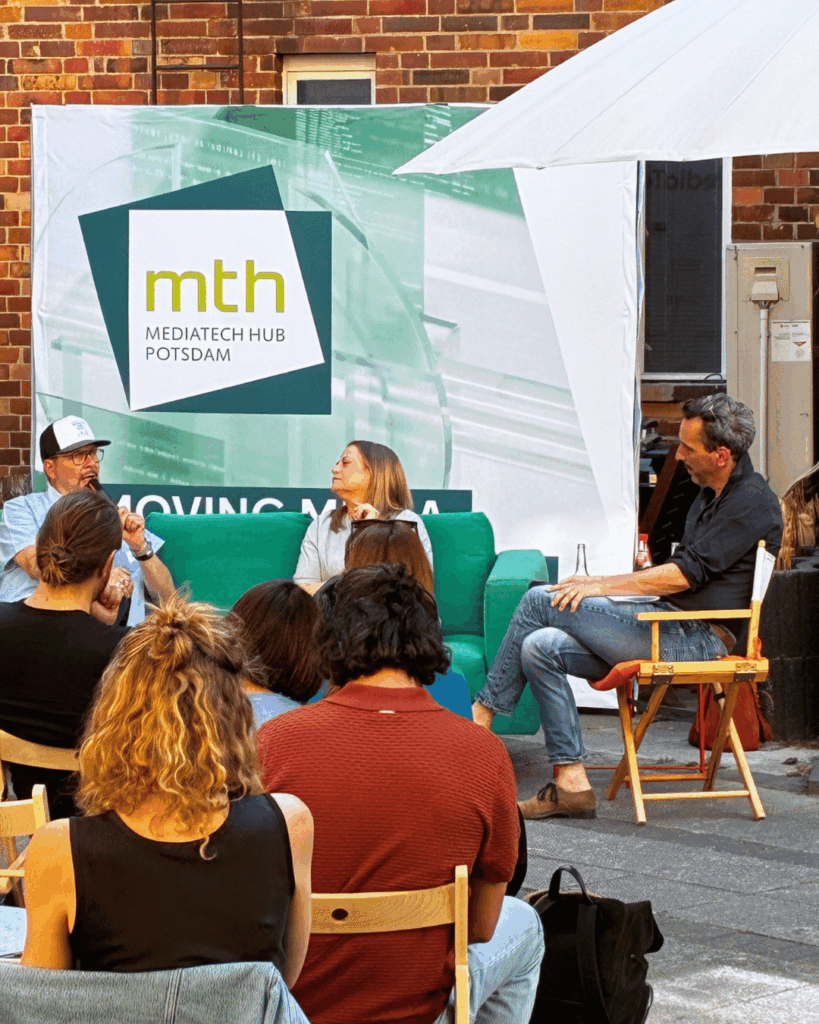
„Die Grüne Couch”: How Can Independent Producers Stay Relevant?
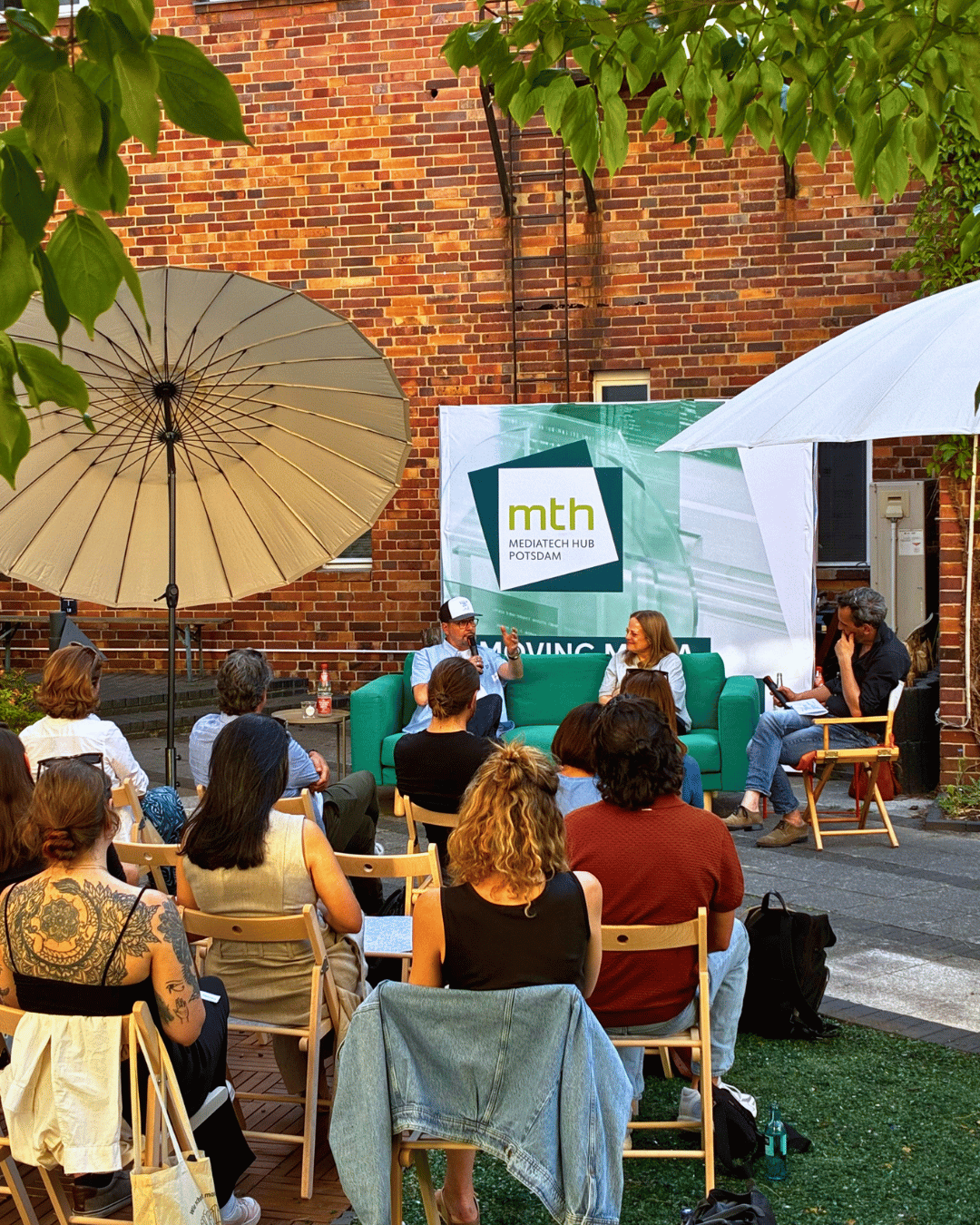
A murder plot in GZSZ, online-creators on Prime Video? At the third edition of “Die Grüne Couch” in the garden of MediaTech Hub Potsdam, one thing became clear: these examples point to the same broader shift. The production realities of film, television, and streaming have changed significantly and more and more independent producers are adapting to this new landscape.
Two Industry Insiders on the Couch
This time, we welcomed two industry professionals who have been closely observing these changes for years: Katja Bäuerle, producer at UFA Serial Drama and responsible, through GZSZ, for one of Germany’s best-known TV series formats; and Oliver Fuchs, producer and CEO of Roses Are Blue DE, who currently works at the intersection of the creator economy and show entertainment.
At the heart of the conversation was the question of how to respond today to shifting viewing habits, new distribution channels, and evolving community expectations. While established TV formats are sometimes stepping outside familiar patterns to generate new attention among loyal audiences, content is also emerging on streaming platforms that already brings this attention with it from the creator economy.
When a Daily Soap Turns into Crime Drama
Katja Bäuerle offered a particularly vivid example through GZSZ. The series, which has been a fixture of the German television market since 1992, recently stepped outside its usual genre with a widely discussed crime storyline centered on the murder of a character. In doing so, the format deliberately moved beyond familiar soap opera dramaturgy and incorporated elements more commonly associated with thrillers or crime narratives.
At the same time, additional content across social media helped fuel community theories and sparked coverage in national media outlets. Katja Bäuerle described this as a form of eventisation within the format.
The Creator Economy on Amazon Prime
Oliver Fuchs offered another perspective on the changing market. He outlined just how much the boundaries between the creator economy and professional moving-image production have shifted in recent years. Formats no longer emerge solely from editorial departments or broadcaster structures. More and more often, creators already bring with them an audience of millions—providing ready-made starting points for shows, series, or entertainment formats.
As an example, Fuchs pointed to “The Way Out,” the Amazon Prime show he produced, which features Julien Bam, one of Germany’s most prominent creators, as host and has already been renewed for a second season.
Eventisation, Community, and New Audience Habits
To remain visible in today’s fragmented media environment, productions are increasingly relying on narrative escalation, deliberately staged exceptional moments, and communicative extensions across social media channels. Individual storylines thus become events that reach far beyond the episode itself.
Changing viewing habits also play a key role. Today’s audience is not only spread across different platforms, but also consumes content in different rhythms and contexts. Mobile viewing, streaming, and algorithm-driven feeds are shaping expectations around pacing, entry points, and relevance.
On top of that, creator collaborations are turning traditional production logic on its head. Where communities already exist, content no longer has to be tested over long periods, and decisions around format development can be made more quickly. Characters, tonalities, and stories are built on audience relationships that are already in place. This opens up opportunities—particularly in terms of reach, loyalty, and brand-building.
And What Role Does AI Play?
Against the backdrop of the ongoing AI hype, many in the industry are asking how production processes may change in the future—whether in development, visualization, or post-production. Oliver Fuchs believes, however, that even if more content can one day be generated entirely by AI, it will still be clear whether a production is backed by real storytelling skill, an understanding of character, and genuine filmmaking experience.
A Look at the Future of Production
Once again, the latest edition of “Die Grüne Couch” showed just how much the industry is currently in transition. Between daily soap and streaming show, between social media extensions and long-standing fan loyalty, between traditional expertise and platform logic, new models of storytelling and production are emerging.
The key question today is increasingly less whether a format comes from the old or the new media generation. What matters far more is how successfully the two can be brought together.